Active projects
The following projects are being active at the institute in 2026:
- one ES program Horizon 2020 project;
- two ERDF projects;
- three VPP projects;
- two fundamental and applied research projects;
- five PostDocs projects;
- three COST activity projects.
H2020 projects

ES program Horizon 2020 (H2020-WIDESPREAD-2020-5) Teaming Phase 2 project “Baltic Biomaterials Centre of Excellence (BBCE)”, project No. 857287, (2020-2026). Project coordinator: Jānis Ločs.
ERDF projects
Renewable BioEngineered Solutions to Address AntibiotiC Resistance in Bone TissUE Applications (RESCUE). Project No. 1.1.1.3./1./24/A/044. Antimicrobial resistance is a global health crisis responsible for millions of deaths each year and is predicted to become the leading cause of death by 2050 without intervention. Bone infections, especially osteomyelitis and implant-associated infections contribute significantly to this burden, particularly with multidrug-resistant pathogens that complicate treatment. Antibiotic-based treatments for bone infections are often ineffective due to biofilm formation, side effects and growing bacterial resistance. The goal of the RESCUE project is to develop innovative injectable nanocomposite hydrogels with antimicrobial and osteogenic properties, without the use of antibiotics.
The RESCUE project is an initiative not related to economic activity, aligning with the core functions of research organizations: first, it focuses on public education to enhance human resource skills, implemented through seminars, STEM events, and public engagement activities; second, the project emphasizes independent research and development, aimed at gaining new knowledge and improving understanding, including collaborative research conducted through effective partnerships between research organization and industrial sector; finally, the project is dedicated to the dissemination of research results without exclusivity or discrimination, ensuring broad societal access to scientific advancements through teaching, open-access databases and publicly available publications. These interconnected activities address urgent global health challenges, such as antimicrobial resistance (AMR), while fostering sustainable development, education and innovation.
Partners: The leading partner (research institution) is Riga Technical University (RTU), with Prof. Dagnija Loca serving as the project scientific leader and coordinator. The project’s collaborating partner (enterprise) is Alternative Plants Ltd., a developer and producer of biotechnological products.
Funding: The total project cost is 656 000 EUR, consisting of ERDF funding of 509 712 EUR, state budget funding of 89 872 EUR, and private costs of 56 416 EUR.
Implementation period: The duration of the project is 36 months from 01.10.2025. to 30.09.2028.
Acknowledgement: The project is co-funded with the support of the European Union Cohesion Policy Programme 2021–2027, Specific Objective 1.1.1 “Strengthening research and innovation capacity and the introduction of advanced technologies in the overall R&I system” Measure 1.1.1.3 “Applied Research”.
Read more about the project activities HERE

Engineering of Multifunctional Barrier Membrane for Periodontal Regeneration through Advanced Microfluidic Tools (EMBRACE). Project No. 1.1.1.5/2/26/A/014. Periodontitis is a highly prevalent inflammatory disease affecting nearly 50% of the global population and, if left untreated, can lead to progressive destruction of the periodontal tissues and ultimately tooth loss. Current treatments are not fully regenerative, while conventional barrier membranes are limited by insufficient functionality and their inability to simultaneously prevent bacterial biofilm formation and support tissue regeneration. The goal of the EMBRACE project is to develop a multifunctional bi-layer barrier membrane for periodontal tissue regeneration, combining antibacterial protection with regenerative properties, together with an advanced microfluidic system that mimics the periodontal microenvironment and bridges the gap between conventional in vitro testing and animal studies.
The EMBRACE project is primarily a research, training, and knowledge-transfer initiative aligned with the core functions of research organisations. First, it focuses on education and skills development through specialised training, interdisciplinary research activities, scientific events, and public engagement, strengthening expertise in biomaterials, microfluidics, cell culture, and biomedical engineering. Second, the project emphasises independent research and development, generating new knowledge through the development of advanced multifunctional biomaterials and physiologically relevant microfluidic evaluation tools, while promoting effective collaboration between academic and non-academic partners. Finally, EMBRACE supports the broad dissemination of research results through scientific publications, conferences, open-access practices, and public engagement activities, while also exploring the potential translation and commercialisation of the developed barrier membrane. These activities aim to advance periodontal regenerative therapies while fostering education, scientific excellence, innovation, and sustainable biomedical research.
Partners/Participants: The leading partner (research institution/ Beneficiary) is Riga Technical University (RTU), with Prof. Dagnija Loca serving as Supervisor and Dr Georgia K. Pouroutzidou as the grant holder/research fellow. The project’s collaborating partner (enterprise) is (Attenborough Dental Ltd, UK-ATT), a company located in Nottingham, UK that specializes in the design and fabrication of dental medical devices.
Funding: The total project cost is 199 249.74 EUR, consisting of ERDF funding of 169 362.27 EUR and state budget funding of 29 887.47 EUR.
Implementation period: The duration of the project is 27 months from 01.09.2026. to 30.11.2028.
Acknowledgement: The project is co-funded with the support of the European Regional Development Fund and the Central Finance and Contracting Agency Republic of Latvia under the Grant number 1.1.1.5/2/26/A/014.
VPP projects

Innovation Fund-Sectoral Research Programme project No. VPP-EM-BIOMEDICĪNA-2022/1-0001. State research project in the field of biomedicine, medical technologies and pharmacy» (BioMedPharm).
The main objective of the project is to develop a national biomedical research platform to address public health issues in the RIS3 field of “Biomedicine, Medical Technology, Bio-Pharmaceutics, and Biotechnology” in accordance with the goals of the State Research Program. To achieve the project objective, the following activities will be carried out:
- Development of new products, technologies, and methods through the implementation of research pilot projects.
- Improvement of scientific results, particularly by increasing the number of interdisciplinary and interinstitutional scientific publications.
- Development of human research capital.
- Enhancement of knowledge base to promote collaboration with industry, including hospitals, and to apply for new national and international research projects and engage in international research consortia.
Project partners: Latvian Institute of Organic Synthesis (LIOS, coordinator), Riga Technical University (RTU), University of Latvia (UL), Riga Stradiņš University (RSU), Institute of Food Safety, Animal Health and Environment (BIOR), Latvian Biomedical Research and Study Center (BMC).
Read more about the project activities HERE
BIOmaterials for infection COntrol and fast bone tissue REgeneration (BIOCORE). Project No. OSI_PIP_BioPhoT-2025/1-0048.
Infections and slow bone regeneration remain serious clinical problems, especially after trauma or surgery. Existing materials often fail to both prevent infection and stimulate bone tissue healing. The project develops next-generation biomaterials with antibacterial properties that simultaneously promote bone regeneration. Within 12 months, BIOCORE’s potential in laboratory conditions will be demonstrated, a clinically relevant product design with medical professionals will be co-developed, and BIOCORE’s intellectual property portfolio will be strengthened.
Funding: The total project costs are 200 000 EUR.
Implementation period: The project duration is 12 months (13.10.2025 to 12.10.2026).
Funding source: Innovation Fund – Long-Term Research Programme “Long-Term National Research Programme Project Biomedicine and Photonics Research Platform for the Development of Innovative Products (BioPhoT)”.
Read more about the project activities HERE
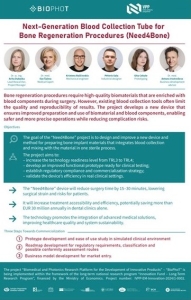
Next-Generation Blood Collection Tube for Bone Regeneration Procedures
Bone loss due to trauma or disease leads to approximately 2.2 million bone grafting procedures annually. Currently clinicians manually mix bone graft materials with patient blood derivatives to enhance healing, a process that extends surgery time by about 15%, resulting in over 350,000 additional operating hours globally each year. This inefficiency increases healthcare costs and limits treatment capacity. To address this, we propose a novel, patent-pending solution Need4Bone. The device and method is designed to simplify and accelerate the preparation of platelet-rich fibrin enhanced grafts such as “sticky bone”. By integrating blood collection and mixing in one sterile step, the technology can reduce surgical time by 15–30 minutes per case – translating into significant clinical and economic benefits, with potential savings more than €30 million annually in dental clinics alone. Within this project current Technology Readiness Level (TRL) 3 of the device will increase to TRL4, with an advanced functional prototype ready for testing in clinical settings alongside the developed regulatory and commercialization strategy. The development team is multidisciplinary, combining expertise in biomaterials, clinical application, regulatory affairs, and commercialization. This scalable innovation offers a practical path to improve surgical efficiency, lower costs, and enhance patient outcomes in bone regeneration procedures.
LZP projects
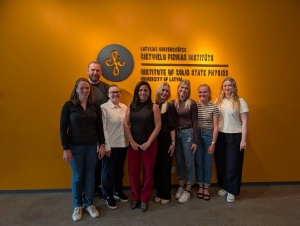
Fundamental and applied research project No. lzp-2024/1-0509 “Microfluidic chip-based platform towards replacing the in vivo rodent calvarial critical-size defect model” (2025-2027).
Project Leader PhD. Jana Vecstaudza.
Project partner: Dr. Viviana Andrea Claveria Pizarro, Institute of Solid State Physics, University of Latvia.
The growing interest in using biomaterials for bone injury treatment drives the development of new biomaterials, leading to the increased use of costly and ethically complex in vivo animal tests to assess their efficacy for bone regeneration. Therefore, microfluidic chip-based platforms that can accurately mimic in vivo responses to biomaterials in vitro and vice versa are urgently needed. This project addresses the need by combining expertise in microfluidic devices, biomaterials, in vitro tools, and molecular biology to develop a new microfluidics chip-based platform for preclinical in vitro assessment of calcium phosphate-based biomaterials for bone tissue regeneration.
The project goal is to establish bone-on-chip device that can yield comparable and corroborative data to the rodent calvarial critical-size defect model, thus providing a reliable and ethical alternative for biomaterial assessment.
The project will carry out the following activities: 1) design and fabrication of new microfluidic chip for incorporation of bone-like biomaterials, 2) fabrication of calcium phosphate enclosed bone-on-chip and in vitro studies thereof, 3) correlation studies of calcium phosphate-based biomaterial and cell response in vitro in the chip with existing data from in vivo calvaria critical-size defect rodent model, and 4) dissemination of project results.
Implementation of the project will contribute to Latvia’s Smart Specialization Strategies for Research and Innovation “Smart materials, technologies and engineering systems” and promote the overall development of the Latvian economy and biomaterial research and development for healthcare.
Fundamental and applied research project Nr. lzp-2025/1-0364 “Load-Bearing Bioresorbable Nanocomposites” (LBBN) (2026-2028).
Project Leader: Prof. Jānis Ločs
The treatment of bone fractures in children varies depending on the child’s age, the fracture site, and the severity of the injury. Most paediatric fractures heal well with a cast, but increasingly, treatment without prolonged casting is preferred—surgery is performed and the fracture is stabilised with plates (osteosynthesis plates).
At present, titanium alloy plates are most commonly used because they are very strong. However, titanium does not resorb in the body after the bone has healed. Therefore, such plates often need to be removed in a second surgery to avoid interfering with bone growth and to reduce the risk of related complications.
As an alternative, bioresorbable (biodegradable and resorbable) implants are being developed. They provide the necessary support during healing and then gradually break down, so a second surgery is usually not needed. Studies show that in children, bioresorbable implants (made from polymers or magnesium alloys) can achieve results comparable to titanium plates.
Polymer implants are safe and effective, but due to their elasticity they can sometimes be more technically challenging to place accurately during surgery. Magnesium implants offer good mechanical stability and resorb relatively quickly, but a major drawback is that their degradation can produce hydrogen gas.
Overall, bioresorbable implants can improve treatment by sparing children a second operation to remove the hardware. Therefore, it is important to develop new load-bearing bioresorbable implants that overcome the limitations of current polymer- and magnesium-based solutions.
The main goal of the LBBN project is to develop a technology for synthesising load-bearing, biocompatible, and bioresorbable nanocomposite materials that replicate the unique hierarchical structure of bone and are similar to the bone extracellular matrix in structure, chemical composition, and physico-mechanical properties.
PostDocs projects
EU Recovery and Resilience Facility funded project No. 5.2.1.1.i.0/2/24/I/CFLA/003 “Implementation of consolidation and management changes at Riga Technical University, Liepaja University, Rezekne Academy of Technology, Latvian Maritime Academy and Liepaja Maritime College for the progress towards excellence in higher education, science, and innovation” grant No. RTU-PG-2024/1-0011 “Enhancing tissue engineering: in vitro evaluation of levan hydrogels with bioactive molecules” (2024-2025). Leader: Dr.sc.ing. Inga Jurgelāne.
Oral soft tissue regeneration after ablative surgery or trauma is challenging, especially in oral cancer patients, whose treatment often results in significant soft tissue loss. Hydrogels with their 3D porous structures has the ability to incorporate water and biologically active compounds into their structure, thus supporting cell growth and tissue regeneration. A potential material for the development of such hydrogels for regenerative medicine and drug delivery is levan, a biocompatible polysaccharide. In the M-era.Net project INJECT-BIO, a novel levan hydrogel (Levan-CBD/IGF-1) was developed, containing liposomes with encapsulated 2 bioactive molecules – insulin-like growth factor 1 (IGF-1) and cannabidiol (CBD). IGF-1 promotes cell proliferation while CBD has anti-inflammatory, wound healing and pain-relieving effects. This hydrogel is compatible with gingival mesenchymal stem cells (GMSCs), which are ideal for oral tissue regeneration due to their differentiation potential. The aim of this project is to determine the effect of Levan-CBD/IGF-1 on the osteogenic and chondrogenic differentiation of GMSCs, thus expanding the potential application of this material in the treatment of maxillofacial wounds.

“Development of in vitro model for bone substitute material cellular response evaluation (VIBE)” (2025-2028) No. 1.1.1.9/LZP/1/24/088. Leader Ph.D. Karina Egle. Bone tissue engineering has advanced significantly in recent years, with a focus on developing scaffolds that replicate both the structural and biological characteristics of bone. In vitro models that enable controlled cell–material interactions and serve as alternatives to animal models have also shown promising results. The scientific objective of the project is to explore novel biomaterials as potential bone substitutes, which would be integrated into a new prototype and tested on cells by creating an in vitro model. The research activities focus on improving existing technologies and developing new solutions, with the long-term aim of reducing the need for in vivo studies. The results of the project will be validated through international scientific conferences and publications. The implementation of the VIBE project will contribute to the development of Smart Specialization Strategies such as “Biomedicine, medical technologies, biopharmacy and biotechnologies” and “Smart materials, technologies and engineering systems,” and will promote the advancement of Latvia’s economy as well as research and development in the field of biomaterials for healthcare.
Activity 1.1.1.9 “Post-doctoral Research” of the Specific Objective 1.1.1 “Strengthening research and innovative capacities and introduction of advanced technologies in the common R&D system” of the European Union’s Cohesion Policy Programme for 2021-2027 research application No 1.1.1.9/LZP/1/24/088.
Read more about the project activities HERE
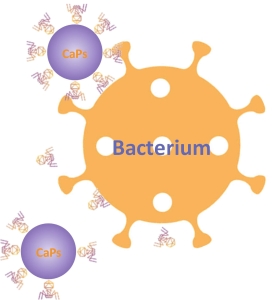
“Antibacterial Biomaterials through Synergy of Metallic Ions-Substituted Calcium Phosphates and Bacteriophages (CaPhage)” (2025-2028) No. 1.1.1.9/LZP/1/24/056. Postdoctorate: Liga STIPNIECE; Scientific consultant: Prof. Dagnija LOCA. Implementation period: July 2025 – June 2028; Total funding: 184 140 EUR.
The project aims to develop multifunctional antibacterial calcium phosphate (CaP) biomaterials combining metal ion (Zn²⁺, Ga³⁺, Cu²⁺) substitution and surface-immobilized bacteriophages to prevent implant-associated infections in orthopedics. These biomaterials will enable controlled antibacterial ion release and localized phage delivery while maintaining biocompatibility with bone tissue. The research addresses the issue of antibiotic resistance and reduces the need for prolonged systemic antibiotic therapy. It integrates materials science and microbiology expertise. The innovative approach will promote the development of safer orthopedic implants and lower the risk of biomaterial-related infections. During the project, the postdoctorate will acquire new competencies in biomaterial development, characterization, and biological evaluation, significantly enhancing her scientific and academic growth. The project outcomes will be widely disseminated within the scientific and public spheres, strengthening Latvia’s research capacity and international visibility in the field of biomedicine.
Activity 1.1.1.9 “Post-doctoral Research” of the Specific Objective 1.1.1 “Strengthening research and innovative capacities and introduction of advanced technologies in the common R&D system” of the European Union’s Cohesion Policy Programme for 2021-2027 research application No 1.1.1.9/LZP/1/24/056.
“Development of metabolite-delivering osteochondral scaffolds for osteochondral tissue regeneration using cold sintering methods” No. 1.1.1.9/LZP/2/25/261. Postdoctoral researcher: Kristaps Rubenis; Scientific consultant: Prof. Janis Locs. Implementation period: January 1st, 2026 – December 31st, 2028; Total funding: 183 297,60 EUR.
The aim of the project is to strengthen the early-career researcher’s skills and research competencies through the implementation of a scientific study on metabolite-delivering osteochondral scaffolds for osteochondral tissue regeneration, fabricated using cold sintering methods. To date, cold sintering has not been applied to the fabrication of osteochondral scaffolds. However, scaffolds produced using this approach are expected to exhibit properties that support osteochondral tissue regeneration more effectively than scaffolds fabricated by conventional approaches. The study will employ an interdisciplinary approach, combining materials science, chemistry, and biology. This approach is essential for achieving the project objectives, as the development and validation of clinically relevant biomaterials require material design, physicochemical characterization, and biological evaluation.
Activity 1.1.1.9 “Post-doctoral Research” of the Specific Objective 1.1.1 “Strengthening research and innovative capacities and introduction of advanced technologies in the common R&D system” of the European Union’s Cohesion Policy Programme for 2021-2027 research application No 1.1.1.9/LZP/2/25/261.
Synergetic Integration of Biochemical and Biophysical Cues in the Design of Next-Generation Bone Regenerative Biomaterials (SynerMat)
(2026–2029) No. 1.1.1.9/LZP/2/25/268
Leader: Dr. Öznur Demir
Bone regeneration remains a major challenge in orthopaedic and dental medicine, particularly in cases of large bone defects where the natural healing process is insufficient. Recent advances in biomaterials research have highlighted the importance of mimicking the complex microenvironment of bone tissue, where biochemical signals and biophysical properties dynamically interact to regulate cellular responses and tissue regeneration.
The scientific objective of the SynerMat project is to develop next-generation bone regenerative biomaterials by integrating biochemical and biophysical cues that better replicate the natural stages of bone healing. The project focuses on designing multifunctional biomaterial systems with tunable viscoelastic properties, bioactive mineral phases, and engineered surface features that together guide cellular behaviour and promote osteogenic tissue formation.
Research activities include the fabrication and characterization of advanced hydrogel-based biomaterials combined with calcium phosphate components, as well as the investigation of their mechanical, structural, and biological performance in vitro. By systematically studying how mechanical properties, surface microstructures, and biochemical factors influence cell–material interactions, the project aims to establish design principles for more effective bone regenerative materials.
The results of the SynerMat project will contribute to the development of innovative biomaterials for bone tissue engineering and will be disseminated through international scientific conferences and peer-reviewed publications. The project aligns with Latvia’s Smart Specialization Strategies, particularly in the areas of “Biomedicine, medical technologies, biopharmacy and biotechnologies” and “Smart materials, technologies and engineering systems.” Through these efforts, SynerMat supports the advancement of scientific excellence and innovation in biomaterials research in Latvia.
Activity 1.1.1.9 “Post-doctoral Research” of the Specific Objective 1.1.1 “Strengthening research and innovative capacities and introduction of advanced technologies in the common R&D system” of the European Union’s Cohesion Policy Programme for 2021–2027, research application No. 1.1.1.9/LZP/2/25/268.
“Advancing Octacalcium Phosphate-Based Scaffolds for Segmental Bone Repair” (2026–2028) No. 1.1.1.9/LZP/2/25/245. Postdoctorate: Paritat Thaitalay; Scientific consultant: Prof. Janis Locs. Implementation period: January 2026 – December 2028; Total funding: 187 557 EUR.
The aim of this project is to develop a ready-to-use injectable octacalcium phosphate (OCP)-forming cement for the treatment of segmental bone defects. The research will focus on creating a cohesive, anti-washout cement that can be extruded through a syringe and needle to form macroporous scaffold structure inside the defect site. This extrusion-based approach will generate interconnected pores between the cement strands, improving conditions for cell infiltration and bone tissue growth. The project will include the synthesis and characterization of injectable OCP-forming cements, evaluation of their physicochemical, rheological, and structural properties, and optimization of scaffold architecture formed during extrusion. The performance of the developed materials will be compared with 3D-print-fabricated scaffolds, and their biological compatibility will be assessed through in vitro studies. By combining the biological advantages of OCP with a simple and accessible extrusion technique, the project aims to develop a practical and cost-effective alternative to complex manufacturing technologies such as 3D printing. The results will contribute to the development of advanced biomaterials for bone regeneration and strengthen Latvia’s research capacity in the field of biomedical materials and tissue engineering.
Activity 1.1.1.9 “Post-doctoral Research” of the Specific Objective 1.1.1 “Strengthening research and innovative capacities and introduction of advanced technologies in the common R&D system” of the European Union’s Cohesion Policy Programme for 2021–2027 research application No 1.1.1.9/LZP/2/25/245.
Electrospun Scaffolds for Targeting Bone Tumor: Fighting Drug Resistance and Supporting Bone Regeneration (R2Bone)
Post doctorate: Ashish Vishwas Pandit; Scientific consultant: Prof. Dagnija Loca. Implementation period: July 2025 – July 2028; Total funding: 184 140 EUR; Project No. 1.1.1.9/LZP/1/24/152.
The aim of the study is to overcome drug resistance in osteosarcoma (OS), which remains a significant challenge in chemotherapy, particularly when using doxorubicin (DOX). Both intrinsic and acquired drug resistance in OS lead to high mortality rates, highlighting the urgent need for new therapeutic strategies.
In this project, we propose to address this issue by developing innovative composite materials composed of chitosan biguanide (CB) and doxorubicin-loaded octacalcium phosphate (DOX-OCP). CB, synthesised by complexing chitosan with cyanoguanidine, is intended to enhance the efficacy of DOX and reduce drug resistance. The composite materials will be fabricated via electrospinning, with the resulting scaffolds mimicking the bone extracellular matrix and promoting bone tissue regeneration while providing anticancer activity. The study aims to develop and characterise CB- and DOX-OCP-based scaffolds and to evaluate their structural, mechanical, and biological properties. In addition, the synergistic effect of CB and DOX will be assessed in both normal and drug-resistant OS cell lines, with particular emphasis on doxorubicin resistance.
The research aligns with Latvia’s Smart Specialisation Strategy (RIS3), particularly in the areas of “Biomedicine, medical technologies, biopharmacy and biotechnology” and “Smart materials, technologies and engineering systems.” The main activities include postdoctoral training and anticancer research aimed at overcoming drug resistance. The expected outcomes include publications in Q1 journals, preparation of project proposals, and the development of a new technology for producing electrospun biopolymer-based composite materials to combat drug resistance in bone tumours.
The total project cost is EUR 184,140. The project is supported by the European Regional Development Fund Activity 1.1.1.9 “Post-doctoral Research” of the Specific Objective 1.1.1 “Strengthening research and innovative capacities and introduction of advanced technologies in the common R&D system” of the European Union’s Cohesion Policy Programme for 2021–2027.
COST activity projects
Management Committee Member at COST Action MP1301 “New Generation Biomimetic and Customized Implants for Bone Engineering” since August, 2013.
COST Action, CA18238 “European transdisciplinary networking platform for marine biotechnology (Ocean4Biotech)” (2019-2023). Project partner: Dr.sc.ing. Arita Dubņika. The overall aim of Ocean4Biotech is to bring together experts in the field of marine biotechnology, to provide a platform for sharing experience, knowledge and technologies, and to design a roadmap for a more efficient and rapid development of marine biotechnology research in Europe and beyond. To best of our knowledge, such a large, diverse and geographically dispersed network of experts in marine biotechnology does not exist. Since marine biotechnology is still in its infancy, we believe this is the optimal timing to create this efficient, operational, motivated, inclusive and sustainable network with a serious and ambitious commitment for proactive dissemination and science communication activities.

Eiropas bioadhēzijas ekspertīzes tīkls (European Network of Bioadhesion Expertise, ENBA), ko finansē Eiropas COST programma (COST akcija CA15216) aktivitātes. Pirmā lielā aktivitāte šajā projektā notika Vīnē (Austrijā) 2017. g. martā. Preses relīze. Dažādas aktivitātes par bioadhezīvo sistēmu daudzveidību un savienošanas principiem – konferences, semināri, kā arī īstermiņa zinātniskās vizītes tiek organizētas katru ceturksni. Papildus informāciju var iegūt, jautājot vadošajai pētniecei Aritai Dubņikai.
Realized projects
RegrOssBio (2023-2025) “Injectable biomimetic octacalcium phosphate based composites with antibacterial action for implant re-ossteointegration”.
(HORIZON-MSCA-2022-PF-01-01) GA 101106882 project, implemented in Riga Technical University by Dr. Anastasia Beketova, Dentist, DDS, Master in Fixed Prosthesis and Implant Prosthodontics, PhD.
Project coordinator: Professor Janis Locs.
Every year 1.8 million of tooth implants are being placed in E.U. Along with it, periimplantitis (PI), the inflammatory infectious disease around tooth implants, became an emerging complication. Clinicians are often confused regarding the effective local antimicrobial therapy for PI, while no appropriate pharmaceutical form exists so far. RegrOssBio aims to develop injectable composite material with antibacterial and bone regenerative properties by utilizing biocompatible materials, such as octacalcium phosphate and natural hydrogels (hyaluronic acid and functionalized gelatin) for local delivery of antibiotics and antibacterial nanoparticles. The developed injectable material for treatment of PI, will be further introduced to the dental market.
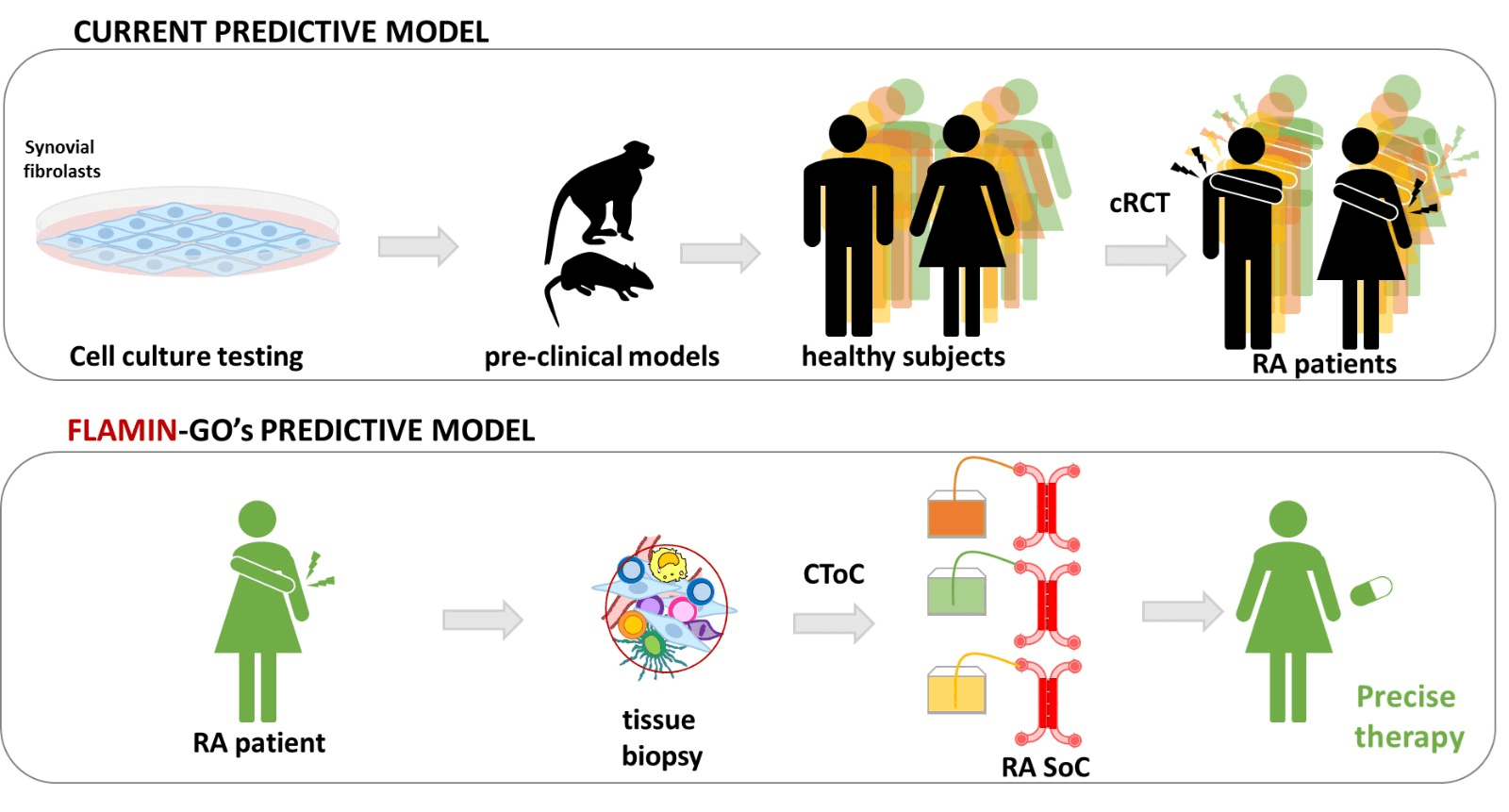
ES program Horizon 2020 project “The potential of precision medicine, a breakthrough for the treatment of rheumatoid arthritis (FLAMIN-GO)” (2021-2024). Project partner: Professor Jānis Ločs.
Project FLAMIN-GO aims at developing an Organ-on-Chip technology for clinical trials on Rheumatoid Arthritis (RA). In RA, a number of unmet needs still persist particularly related to response/non-response of powerful but expensive drugs. Conventional clinical trials may address part of these challenges, but are time consuming, expensive and ethically ethically doubtful as part of the patients still fail to achieve disease benefits. Thus, the rheumatology community has a need for an alternative strategy that can deliver innovative trials.
FLAMIN-GO develops a personalized next-generation synovia-on-chip, that, by effectively mimicking the complexity of RA joint, will allow performing personalized clinical trials-on-chip. The solution will be based on design and fabrication of a multi-compartment microfluidic platform, for 3D culturing and perfusion of all the disease-relevant joint tissues. It focuses on synovia and synovial fluid, which are the pathogenetic targeted tissues, but including immune system, who sustain the disease, and cartilage and bone which are the end damaged tissues, leading to permanent disability. Starting from individual patient biopsies, this model seeks to replicate RA joints, thus allowing to test and allocate the best on-market drug for that patient in 1-2 months starting form biopsy. When validated, the platform will also be a turning point for i) pharma by enabling screening of new drugs reducing costs, time, and animal testing and for ii) translational research for identification of new biomarkers or therapeutic targets.
FLAMIN-GO consortium features a strong, well-balanced composition of hospital, academia and industry partners, who cover with complementary expertise the whole value chain. It gathers experts in the fields of rheumatology, material science, tissue engineering, nanotechnology, cell biology and 3D modelling, in a cohesive, transdisciplinary, multi-sectorial approach taking on the challenge to drive RA personalized care.
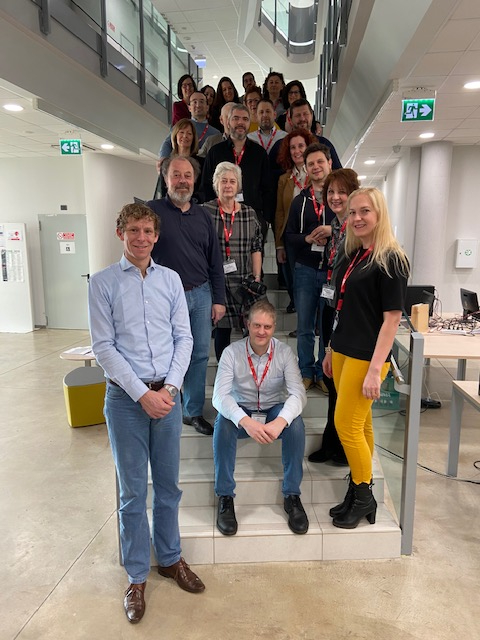
ES program Horizon 2020 (MSCA-ITN-2019) Innovative Training Networks project “Precision medicine for muscoloskeletal regeneration, prosthetics and active ageing – PREMUROSA; project No. 860462)” (2020-2023). Project partner: Prof., Dr.sc.ing. Jānis Ločs. Muscoloskeletal diseases are a major burden on individuals, healthcare and welfare systems. Treatment of muscolo-skeletal disorders is currently based either on prosthetic or regenerative surgical procedures, often involving medical device implantation. In both cases, individual tissue healing and regeneration, together with the appropriateness of the implanted device, markedly affect the outcome. A great improvement could be achieved by precision medicine, specifically designed on patient’s individual characteristics. This implies to combine the personalized clinical approach with individual ‘omic’ characterization and proper choice of medical device. The concept is “To take care with care”. This is the meaning of the Italian word “premurosa” and the ultimate goal of the ITN PREMUROSA project, aimed to train a new generation of scientists with an integrated vision of the whole value chain in muscolo-skeletal regeneration technologies and able to boost the necessary innovations to achieve precision principles in developing innovative devices and optimized clinical applications. This aim will be achieved by a “triple i” (interdisciplinary, intersectoral, international) approach of thirteen ESRs, who will benefit from an excellent scientific environment, up-date technologies and supervision by international leaders in the field. They will learn to integrate academic and industrial aspects and they will sharpen their experimental and complementary skills in a well-designed and diversified and unprecedented training program.
M.ERA.NET project “Bioactive injectable hydrogels for soft tissue regeneration after reconstructive maxillofacial surgeries (INJECT-BIO)” (2020-2023). Project leader: Dr.sc.ing. Arita Dubņika. Oral soft tissue regeneration after ablative surgery or trauma is still a challenging goal in today’s clinical routine. Currently available biomaterials in the market act as soft tissue fillers, but cannot ensure the bioactive response and/or ingrowth of gum-derived cells. In INJECT-BIO project, the development of advanced biomaterials and drug delivery systems for oral soft tissue regeneration will be investigated by applying Halomanas levan and bacterial cellulose-based injectable hydrogels containing IGF-1 and cannabis extract/cannabidiol liposomal simultaneous delivery systems. The project consortium unites the expertise, complementary skills and infrastructure of researchers and professionals from 5 countries – Latvia, Lithuania, Israel, Turkey and Czech Republic. The INJECT-BIO project will generate advanced know-how and knowledge of hydrogel-cell interactions leading the product till TRL4, giving a great potential for INJECT-BIO results to be transferred in the market.

Fundamental and applied research project No. lzp-2020/1-0054 “Development of antibacterial autologous fibrin matrices in maxillofacial surgery (MATRIX-X)” (2021-2023). Project leader Arita Dubņika. Project partner: MD., Dr.med. Ilze Salma, Riga Stradins Universty, Faculty of Dentistry, Department of Oral and Maxillofacial Surgery. The oral maxillofacial bone is a site of predilection for tumors, inflammation, trauma, and congenital disease that are usually treated by surgical operations, and surgical site infections represent second-most common hospital-acquired infections. Therefore, the overall goal of the proposed MATRI-X project is to develop controllable clindamycin and autologous growth factor delivery systems on the basis of marine polysaccharides and autologous platelet rich fibrin (PRF) matrice, simultaneously ensuring prophylactic antibiotic treatment and promoted tissue regeneration. The novel clindamycin and growth factor sustained delivery system will be designed on PRF and self-assembling fucoidan and chitosan microgels/particles (starting from TRL2 and ending up to TRL4). Physicochemical properties and antibacterial activity against isolated bacteria from clinical specimens will be investigated.The research results have a potential for transfer from laboratory to the market as high added value biomedical products. Thus, they can give a beneficial impact on the Latvian national economy as well as public health sector and promote a development of sustainable modern healthcare system by improvement of the quality of life of patients who suffer from tissue defects and disorders.
Read more about the project activities HERE

ES program Horizon 2020 (H2020-WIDESPREAD-2020-5) Twinning project “Rising competitiveness of early stage researchers and research management in Latvia – RISEus2; project No. 952347)” (2021-2023). Project leader: Prof., Dr.sc.ing. Jānis Ločs. Early stage researchers (ESR) from low performing countries are less competitive in the international scientific area than ESR’s form internationally-leading counterparts. This is strongly related not only to the applicants itself, but also to the environment in which they were seeded as next generation researchers – meaning Universities. The competitiveness in scientific area is related to well measurable indicators, such as impact factors, papers in high-ranking journals, H-index, competitive funding, etc. Hence RISEus2 project´s Overall Objective is to significantly strengthen the research management and administration skills of RTU RBIDC leading staff and increase the research profile of ESR hosted in RTU RBIDC in the area of biomaterials development for bone tissue replacement and regeneration based on the long-term strategic cooperation between RTU RBIDC and three internationally leading counterparts: AO Research Institute Davos, Switzerland (ARI), Institut National Polytechnique de Toulouse CIRIMAT, France (INPT-CIRIMAT) and FORM-Lab Frankfurt Orofacial Regenerative Medicine, Goethe University Frankfurt, Germany (GUF). The purpose of RISEus2 is to create links and provide training which will ensure that RTU RBIDC will gain new knowledge and approaches of biomaterials research planning, implementation and exploitation. This will include methods, tools, equipment and effective infrastructure exploitation necessary to develop excellence in biomaterials research, that will boost the cooperation with the industry, thus becoming internationally competitive and attractive. The main RISEus2 activities include two way collaborative visits, mobility of staff, summer and winter schools, workshops at partner institutions, strengthening the visibility and cooperation with industry and intensive dissemination and outreach activities.
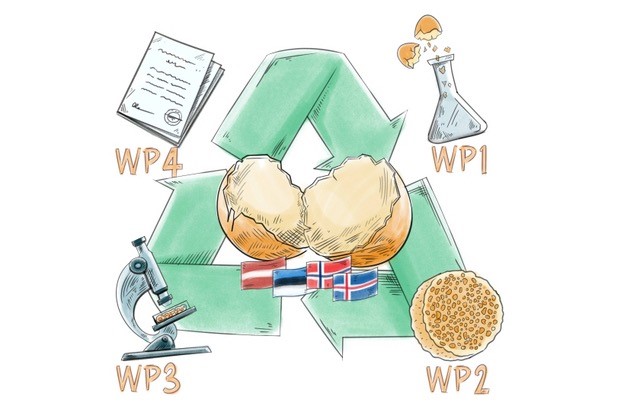
“Waste-to-resource: eggshells as a source for next generation biomaterials for bone regeneration (EGGSHELL)” (No. EEA-RESEARCH-85) is one of the Baltic Research Programme’s projects, which is financially supported by the European Economic Area (EEA) Grants of Iceland, Liechtenstein and Norway (https://eeagrants.lv/ and https://eeagrants.org/). The project is developed in cooperation between Riga Technical University as a coordinating institution and University of Oslo (UiO), Reykjavik University (RU) and Tallinn University of Technology (TalTech) as project partners. Project Coordinator is RTU professor Dagnija Loca. The implementation of the project started on May 1, 2021. Furthermore, until 30.04.2024 total funding of the EGGSHELL project is 799 787 euros.
Scientists from RTU, University of Oslo, Reykjavik University and Tallinn University of Technology have merged their competences to develop a novel concept for conversion of eggshells into the next generation biomaterials for bone regeneration. RTU scientists will synthesize amorphous calcium phosphates, partners from TalTech will form macroporous ACP ceramic substrates, while scientists in Oslo and Reykjavik will characterize and assess biocompatibility so that in perspective obtained constructs can be used in the production of implantable materials.
In the egg production industry, large percentage of eggs (approx. 32% in United States, close to 25% in Europe) are diverted to breaker operations – to produce liquid egg products. The by-products of these operations are the eggshell and associated membranes, which constitute approximately 6g/egg. In the US expenses for one breaker plant can exceed even $100,000 per year to dispose the eggshell waste into the landfills. Therefore, egg-based processing companies are highly interested to extract products with potential commercial application from the eggshell waste. During the project we will verify that the technologies for turning the waste (chicken eggshells) into high added value products are available and need to be further developed. We aim to develop a novel concept for conversion of eggshells into the next generation biomaterials for bone regeneration. While there is a rich literature on conversion of eggshells to calcium phosphates (CaP) such as hydroxyapatite and tricalcium phosphate, conversion to amorphous calcium phosphate (ACP) has received little attention that is mainly related to ACP metastability. Within the current project we will use chicken eggshells as a raw material to synthesize ACP with improved stability, that will be for the first time further applied to produce novel porous, bone-like ACP ceramic scaffolds. Moreover, to fully recycle the proposed waste – chicken eggshells into the high added value products, proteins from eggshell membranes will be extracted as they have a high content of bioactive components possessing antibacterial effects and can be further explored as coatings for porous ACP ceramic scaffolds.
Read more about the project activities HERE
EuroNanoMed III project “NANO delivery system for one-shot regenerative terapy of peri-implantis (ImplantNano)” (2020-2023). Project leader: Prof., Dr.sc.ing. Jānis Ločs. The use of dental implants, including titanium (Ti) and its alloys, to restore missing teeth has become a routine method of treatment. However, complications associated with inflammation around the implant, such as periimplantitis, are becoming more common. The main goal of the multidisciplinary project ImplantNano is to create innovative, ready-to-use nano-composite drug delivery systems for the effective treatment of periimplantitis. The project will improve previously developed nano-composite drug delivery systems based on a biodegradable polymer with the aim of granting bone regenerating properties and ensuring control of the release profile of antibacterial drugs. Within the framework of the project, antibacterial calcium phosphate nanoparticles containing Ga3+ ions will be synthesized at the RTU RC RBIDC and will be used as nano-composite fillers.
European Regional Development Fund within the Activity 1.1.1.2 “Post-doctoral Research Aid” of the Specific Aid Objective 1.1.1 “To increase the research and innovative capacity of scientific institutions of Latvia and the ability to attract external financing, investing in human resources and infrastructure” of the Operational Programme “Growth and Employment” post-doctoral research project:
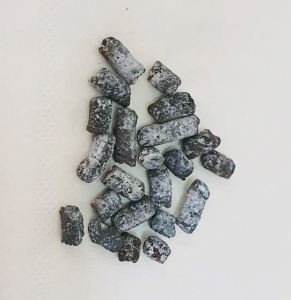
“Investigation of carbon containing materials and method development for heavy metal removal from water” (2018-2021). No. 1.1.1.2/VIAA/1/16/049. Leader: Dr.sc.ing. Inga Jurgelāne. The scientific aim of this project is to develop effective and environmental friendly adsorption materials with relatively low costs and laboratory size prototype for water purification from heavy metals. Shungite, hydroxyapatite and clays will be used as raw materials. The main tasks contain material preparation and characterization, adsorption of Cu2+, Zn2+, Pb2+, Cd2+, Ni2+, Cr6+ and As5+ ions, regeneration of the used materials and development of laboratory size prototype.
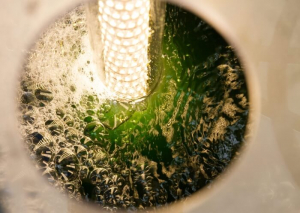
“Design of artificial lighting for phycocyanin production in bubble column photobioreactor” (2020-2023) No. 1.1.1.2/VIAA/3/19/427. Leader: Dr.sc.ing. Agnese Stunda-Zujeva. The project objective is to develop efficient artificial lighting regime for Arthrospira cultivation in bubble column photobioreactor (PBR) to improve the synthesis of phycocyanin(C-PC). For the first time two-stage lighting and night illumination will be tested for Arthrospira cultivation that has shown promising results for other microalgae productivity and composition control. The lighting profiles will be adapted to biomass and product building phases. Activities. 1) two-stage lighting and night illumination – batch study depending of process phase. 2) Scale-up to bubble column PBR, semi-batch study, PBR with immersed LED illumination development; 3) Adaptation of Arthrospira to specific light in long term. Results. Compared response of several Arthrospira strains (including C-PC concentration) to various lighting modes. Developed effective lighting (kWh/kgproduct) protocol and light source topology for 200L PBR, investigated correlations on lighting and aeration on biomass productivity.
“Bioactive synthetic dental enamel – the future of restorative stomatology (BioDEN)” (2020-2023) No. 1.1.1.2/VIAA/3/19/459. Leader: Dr.sc.ing. Vita Zālīte. The most common oral disease is caries that in long-term leads to the loss of sufficient dental hard tissue, in addition, different accidents during lifetime of human can cause detriment of tooth part or even all tooth, thus leading to aesthetic problems. Restorative dentistry provides different artificial materials to replace lost tooth parts, but none of them show bioactivity. Therefore, the goal of the scientific project is to combine calcium phosphate material with organic phase in order to develop new biocomposites mimicking the natural tooth enamel. To obtain mechanically strong biocomposite, new technology, called cold sintering process, will be applied. Through reaching the scientific goal, novel methodologies will be developed and post-doctorate will be able to build her scientific capacity in multidisciplinary fields. Scientific articles and conferences will ensure approbation of the results. The implementation of the project includes calcium phosphate synthesis, preparation and characterization of composite materials by cold sintering process. The research project proposal goes under two scientific fields: engineering and technology (materials engineering), medical and health sciences (health sciences), therefore it has multidisciplinary nature. It is expected that the developed material could be used for further preclinical and clinical studies and finally transferred to industry.
Fundamental and applied research project No. lzp-2020/1-0072 “Injectable bioactive biocomposites for osteoporotic bone tissue regeneration (inBioBone)” (2021-2023). Project leader Kristīne Šalma-Ancāne. Bone regeneration is still a substantial medical challenge in today’s clinical routine. One of the main reasons is a global silent epidemic – osteoporosis. The overall objective of the proposed “InBioBone” project is to develop novel injectable bioactive biocomposites based on strontium substituted or strontium ranelate loaded nanosized hydroxyapatite, ɛ-poly(L-lysine) and hyaluronic acid to fill the osteoporotic bone defects, simultaneously providing antibacterial treatment and healing of osteoporotic bone fractures. The novel injectable biocomposites will be fabricated using in situ chemical crosslinking synthesis of hydrogel matrix and simultaneously precipitation of hydroxyapatite into this matrix. The physicochemical properties, in vitro antibacterial activity, cytotoxicity, osteoinductive properties will be investigated. Results will be summarized in high impact Open Access publications and presented at international conferences. The implementation of the “InBioBone” will contribute to the development of Smart Specialization Areas such as “Biomedicine, medical technologies”, “Bio-pharmacy and biotechnologies” and promote the overall development of Latvian economy and biomaterials R&D for healthcare sector. Within “InBioBone” novel biocomposites will be developed (starting from TRL2 and ending up to TRL4) which are potentially transferable from laboratory to the biomedical product industry.
“Self-cementing, mouldable and microporous particulate system for enhanced bone regeneration and drug delivery” (2021-2023) No. 1.1.1.2/VIAA/4/20/640. Leader: Dr.sc.ing. Zilgma Irbe. The development of multifunctional material for bone regeneration, including a local drug delivery function, is proposed in this project. The developed system is a novel high added value material – a self-cementing calcium phosphate based granules that form a macroporous, rigid structure after application. The system consists of calcium phosphate particles coated with self-cementing layer and of biodegradable drug microcapsules. This material is intended to combine the advantages existing calcium phosphate materials and to have easily adjustable properties (biodegradation rate, drugs to be delivered). The material is intended to be used to promote bone regeneration in complicated cases, such as extensive bone tissue damage and bacterial infections. The research carried out in this project will further the existing scientific knowledge on cementing processes based on calcium phosphates and using microencapsulation technologies for drugs (mainly antibiotics) to obtain controlled drug delivery systems. The project objectives match the objectives of RIS3 and priorities of Latvian development, which include increasing innovation capacity, development of novel biomaterials in the field of biomedicine, medical technologies and biopharmacy, as well as development of technologies for advanced materials and engineering sciences.
Read more about the project activities HERE
Fundamental and applied research project No. lzp-2020/2-0394 “Innovative bio-based composite granules for collecting oil spills from the water surface (InnoGran)” (2021-2023). Project partner professor J. Ozoliņš, researcher A. Šiškisns, scientific assistant M. Plohuta, scientific assistant A. Tumiloviča. InnoGran project aims to develop and to study methods of granulation and properties of obtained composite material with bio-binder in the form of granules for petroleum (and other hydrocarbons) collection from the water surface. The InnoGran project accumulates previously gained knowledge about: (1) bio-based binder made of homogenised peat obtained by dispersion of micro- and nano-sized particles in a liquid media, using Shock-Wave type disperser (SWD), (2) utilisation of crumb rubber for oil collection, and (3) recent developments in research of granulation processes.
Fundamental and applied research project No. lzp-2020/1-0072 “Injectable bioactive biocomposites for osteoporotic bone tissue regeneration (inBioBone)” (2021-2023). Project leader Kristīne Šalma-Ancāne. Bone regeneration is still a substantial medical challenge in today’s clinical routine. One of the main reasons is a global silent epidemic – osteoporosis. The overall objective of the proposed “InBioBone” project is to develop novel injectable bioactive biocomposites based on strontium substituted or strontium ranelate loaded nanosized hydroxyapatite, ɛ-poly(L-lysine) and hyaluronic acid to fill the osteoporotic bone defects, simultaneously providing antibacterial treatment and healing of osteoporotic bone fractures. The novel injectable biocomposites will be fabricated using in situ chemical crosslinking synthesis of hydrogel matrix and simultaneously precipitation of hydroxyapatite into this matrix. The physicochemical properties, in vitro antibacterial activity, cytotoxicity, osteoinductive properties will be investigated. Results will be summarized in high impact Open Access publications and presented at international conferences. The implementation of the “InBioBone” will contribute to the development of Smart Specialization Areas such as “Biomedicine, medical technologies”, “Bio-pharmacy and biotechnologies” and promote the overall development of Latvian economy and biomaterials R&D for healthcare sector. Within “InBioBone” novel biocomposites will be developed (starting from TRL2 and ending up to TRL4) which are potentially transferable from laboratory to the biomedical product industry.
Fundamental and applied research project No. lzp-2019/1-0005 “Injectable in situ self-crosslinking composite hydrogels for bone tissue regeneration (iBone)” (2020-2022). Project leader Dagnija Loča. Musculoskeletal system diseases (osteoarthritis, osteoporosis etc.) and disorders are the second largest contributor to disability worldwide. The overall goal of iBone project was to develop novel injectable in situ self-crosslinking hydrogel for bone tissue regeneration, based on nanosized calcium deficient hydroxyapatite, ɛ-poly(L-lysine) and hyaluronic acid, simultaneously ensuring antibacterial effect and promoted bone regeneration. The novel hydrogels were fabricated using calcium phosphate in situ synthesis in biopolymers solution. The physicochemical properties, in vitro antimicrobial activity, cytotoxicity and osteoinductive properties were investigated. Results summarized in high impact Open Access publications and presented at international conferences. The research proposal matches with the Priority Directions in Science in Latvia such as Technologies, Materials and Systems Engineering for Increased Added Value Products and Processes and Public Health. Within iBone project novel injectable hydrogels were developed (starting from TRL2 and ending up to TRL4) with a potential for transfer from laboratory to the market as high added value biomedical products or new technologies. The research results can give a beneficial impact on the Latvian national economy and public health sector and promote a development of sustainable modern healthcare system by improvement of the quality of life of patients who suffer from bone defects and disorders.
Read more about the project activities HERE
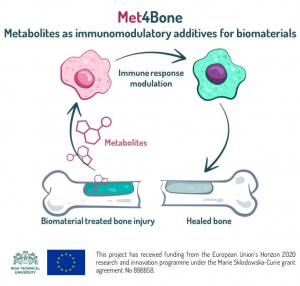
ES program Horizon 2020 (MSCA-IF-EF-ST) Marie Sklodowska-Curie Actions Individual Fellowships project “Metabolites as immunomodulatory additives for biomaterials (Met4Bone)” (2020-2022). Project leader: Dr. Kristaps Kļaviņš. The biomaterials are crucial for the surgical remediation of bone defects caused by various diseases. However, there are several risks associated with this treatment; first, the surgical procedure itself carries a potential risk of inflammation and bone infection, second, the bone replacement can fail requiring revision surgery. In fact, the host immune response to implanted materials and devices is the main factor that will determine a long-term functional outcome of the biomaterial mediated treatment. The main aim of this project was to develop novel biomaterials with incorporated metabolites as a potentially effective and safe strategy to modulate local immune response towards favourable outcomes of surgical bone remediation. This interdisciplinary project combined the recent concept of metabolomics with the state of the art biomaterial design and research.
LIFE+ program project “Alina Life Formulations in Open-Source Platform (LIFE ALFIO)” (2019-2022). Project partner: Dr.sc.ing. Olita Medne. The general objective was to reduce the impact of toxic chemicals on the environment and human health by reducing and replacing toxic biocidal and VOC paint and coating components with safe, sustainable and new organoclay material. Specific objectives of the project was: To pilot the use of organoclay additives in 16 environmentally friendly, reduced VOC and biocide-free paints and recipes as a transferable solution in the production of paints and coatings. And to promote and make easily transferable VOC and biocide reduction opportunities by developing an online platform: 1) for publishing paint formulations, 2) for transparency and traceability of paint and coating components, 3) for industry communication. The project provided a toolkit for the paint and coating industry to replace toxic chemicals. The new approach to a public online platform with published formulations and the ability to track components will increase industry knowledge and facilitate transparency of product values.
Fundamental and applied research project No. lzp-2018/1-0238 “Future of synthetic bone graft materials – in vivo guided biosynthesis of biomimetic hydroxyapatite” (2018-2021). Project leader Jānis Ločs. Despite all the performed biomaterial related research for the last decades, more effective materials for regeneration of damaged bone tissue caused by aging, diseases, trauma and pathologies are still needed. Aim of the project was to develop synthetic bone regenerating material with excellent properties that are comparable with “gold standard”, i.e., natural bone. Material we are working with is biomimetic amorphous calcium phosphate. Amorphous calcium phosphate is considered to be the first inorganic phase, which form new bone tissue. Both amorphous calcium phosphate and natural bone mineral is mostly made of calcium and phosphorus elements. Nevertheless, natural bone comprises small amounts of other elements, e.g., magnesium, strontium, zinc, sodium, potassium and fluorine. Within framework of the project amorphous calcium phosphate containing these elements will be obtained, thus approaching natural bone in terms of composition, properties and performance.
“Application of cold sintering process for preparation of bioceramics and biocomposites with enhanced properties” (2019-2021) No. 1.1.1.2/VIAA/2/18/318. Leader: Dr.sc.ing. Kristaps Rubenis. For a long time, scientists have tried to minimize sintering temperature of ceramic materials, therefore, the recently discovered Cold Sintering Process (CSP) have attracted great interest, since it allows to sinter and integrate various materials at temperatures below 300 °C. So far, CSP practically have not been used to produce bioceramics and biopolymer/bioceramic composites, although this method could substantially improve various properties of the respective materials as compared to the ones produced by conventional techniques. Therefore, the goal of the present project is to obtain bioceramics and biocomposites with improved mechanical properties and bioactivity by using the CSP. The main tasks include preparation of different bioceramic and biocomposite materials by CSP as well as their characterization. Through reaching the scientific goal, novel methodologies will be developed, and post-doctorate will build his scientific capacity in multidisciplinary fields and this knowledge will help him to become a mature researcher. The obtained results will be published in international peer-reviewed scientific journals with high impact factors and presented in relevant scientific conferences. It is expected that the developed materials will be used for the further clinical studies and in future will be transferred to industry.
“Bioceramic-Based Scaffolds for Bone Regeneration and Controlled-Release Local Delivery of Antimicrobials” (2018-2021) No. 1.1.1.2/VIAA/2/18/339. Leader: Dr.sc.ing. Līga Stīpniece. The project was aimed to develop highly porous calcium phosphate bioceramic scaffolds containing bacteriophages coated on the surface and antibacterial metal ions (Ag(I), Ti(IV)) within the bulk structure through immobilization techniques, which preserves the stability of the antimicrobials over time and ensures release in a controlled manner over time to fight against resurgence of multiresistant bacteria antibiotics. The project presents an alternative approach for biomaterials associated infections prevention by development of materials with dual-functionality, namely, osteoconductivity and antibacterial capability provided by the use of the antibacterial ions and the bacteriophages instead of classical approach, i.e. antibiotics. The implementation of the activities of the project contributes to reaching one of the goals of Latvian Smart Specialization Strategy (RIS3) 6th growth priority the development of 2nd and 3rd Smart Specialization Area – Biomedicine, medical technologies, bio-pharmacy and biotechnology and Smart materials, technology and engineering systems.
EuroNanoMed3 project “NANOstructured oSteoChOndral scaffold: novel biomimetic tRiggErS for enhanced bone regeneration (NANO-SCORES)” (2018-2021). Project leader Jānis Ločs. Degeneration of the articular osteochondral tissues pain and decreased function leading to osteoarthritis. Till now, only one osteochondral scaffold (developed by two partners of the project consortium) has been translated in the clinical practice to restore the damaged joint surface. Results have been satisfactory for the cartilage layer, but regeneration of the subchondral bone by the scaffold has to be improved. The NANO-SCORES project aims to improve this clinically tested osteochondral scaffold by introducing two new nano-strategies: (i) nanostructured “ion banks” in the form of amorphous calcium phosphate granules with Sr and (ii) bioactive peptides, such as SDF1, PDGFBB, BMP2 and GDF5 bioconjugated to the scaffold.
“Drug and growth factor dual delivery from different biomaterial carriers for bine tissue engineering (2ForBone)” (2018-2020). Project leader: Arita Dubnika. The goal of the 2ForBone project was to develop an antibiotic drug and growth factor dual delivery systems on the basis of different biomaterial scaffolds (bioceramics, hydrogels and bone cements) and compare these systems, to develop better drug and growth factor biomaterial carriers than these, currently available for the bone tissue engineering in clinics. The study was designed in three stages, starting from material development till their characterization in vitro. Accordingly, direct comparisons among a material preparation and different characterization data (i.e. chemical, mechanical, release kinetics, cytotoxicity, etc) were ensured.
“Multifunctional calcium phosphate and biodegradable polymer composites for therapeutic bone tissue engineering” (No. 1.1.1.2/VIAA/1/16/045) (2017-2020). Project leader: Kristīne Šalma-Ancāne. Repair and healing fractures caused by osteoporosis or cancer still remains a major clinical challenge in orthopaedic surgery. The scientific objective of proposed project was to develop novel multifunctional composites and composite hydrogels based on nanosized hydroxyapatite and biodegradable polymers such as ɛ- poly(L-lysine) or poly(vinyl alcohol) loaded with the antiosteoporotic agent strontium ranelate or the anti-cancer drug doxorubicin for bone fracture healing and effective local therapeutic treatment of osteoporosis or bone cancer. The composites and composite hydrogels were developed by novel advantageous methodology using in situ synthesis of hydroxyapatite in drug containing polymer solution and spray drying technology or freeze-thawing technique. The physicochemical and mechanical properties were investigated, as well as biodegradation, drug release kinetics, cytocompatibility study and antibacterial activity were performed. The obtained research results were transferred in the development of high added value bone graft substitutes which are potentially transferable from laboratory to the biomedical product industry. The implementation of the proposed project was provide new knowledge and know-how of biomaterials research and development for bone tissue engineering applications.
ERA-NET EU-LAC Health project “Efficient and affordable water treatment technologies to minimise waterborne diseases” (2018-2020). The project aims was to produce and demonstrate on a field- scale several point -of-use water treatment technologies that will be specially targeted to rural communities, affordable and easy to use. Within the project specially coated membranes with increased efficiency, titanium oxides electrodes and novel hybrid UV microfiltration system were designed and evaluated for their efficiency to neutralize bacterial, viral and protozoan pollution.
EuroNanoMed II project “PhOtocrosslinked hydrogels for guided periodontal TissUe Regeneration” (POsTURE) (2015-2018). Project leader: Dagnija Loča. Periodontitis, a recognized disease worldwide, is a serious gum infection that damages soft tissue and results in loss of tooth-supporting alveolar bone. Regenerative periodontal procedures aim to reverse this damage by using both a bone graft and a membrane to obtain complete tissue reconstruction. The multidisciplinary POsTURE project aims to develop an innovative periodontal regeneration device based on: (i) a self-setting injectable bone grafting material containing Sr, Mg or Si substituted CaP nanoparticles with enhanced bioactivity and (ii) a photo-cross-linked interpenetrating polymer network based on UV photosensitive methacrylated dextran that will be applied as a viscous solution and cured in situ with UV light, as a membrane to prevent excessive proliferation of gingival tissue.
ERDF project (1.1.1.1/16/A/144) “Influence of the magnetic field initiated stirring on biotechnological processes” (2017-2019). The aim of the project was to investigate the influence of the created field of the magnetic field initiated stirring on the growth and biosynthesis of microorganisms. Based on this information, determine the usability boundaries of magnetic drive for various sterile biotechnological processes. The conditions of sterility are crucial for the biotechnological processes. One of the most typical contamination points of the bioreactor is stirring drive mechanical sealing. For solving this problem, the magnetic drive stirrers are used. As a result, microorganisms circulate in direct contact with the magnetic rotor. Despite the perspective of this kind of application, no unequivocal information about the influence of the magnetic field-initiated mixing on microorganism growth and biosynthesis is available. Within the framework of the project, RTU is performing cultivation of mammalian cells and calculations of reactor scaling in connection with the use of magnetic rotors.
RTU Scientific Research Project “Development of Production Method for High-Performance Nano-concrete with Low Water/Cement Ratio” (2018). The project was implemented in cooperation between two RTU structural units – Department of Building Materials and Building Products, Institute of Materials and Structures and Institute of General Chemical Engineering (IGCE). The aim of the project was to develop a method for the production of high-performance nano-concrete by partly replacing with mineral, industrial by-products and production residues and thus reducing the amount of cement used, thereby promoting resource efficiency and increasing the environmental sustainability of products. Considering that the costs of production of cement are continuously increasing with the increase in the costs of electricity, it is expected that the introduction of high-performance nano-concrete production technology will significantly improve the economic performance of the merchant’s business and increase competitiveness in the construction sector. The role of the IGCE was to determine the chemical and mineralogical composition of the raw materials used, as well as to study the binder and nano- or microfillers systems in order to create optimal compositions and to provide efficient cement hydration processes.
RTU Scientific Research Project “Innovative methods for concrete frost resistance provision and control” (2019). Project partner: Kristaps Rubenis. The project aims was to develop methods for concrete frost resistance provision and control. The first method was determine parameters for the addition of elastic microgranules: recommended fraction composition of microgranules, mixing order (sequence, time) and surfactants (superplasticizer and anti-foaming agent) for control of air entrainment and distribution of microparticles in a concrete matrix that will provide the necessary frost resistance and concrete grade. The second method involved the analysis of concrete structure images for pore and rubber microparticles size and distribution determination in a concrete matrix. This were give an opportunity to evaluate spare pore distribution for prediction of frost resistance in a hardened concrete.
RTU Scientific Research Project “Development of innovative frost-durable concrete by using rubber microgranules” (2018). Project partner: Kristaps Rubenis. The aim of this project was to develop ready-to-use, economically viable concrete compositions with enhanced frost durability, by using rubber microgranules obtained from scrap tires to enhance frost durability of the concrete.
RTU Scientific Research Project “Energy production from the food waste” (2018). The project aims was to develop a technology for the treatment of food waste with a high concentration of fats for biogas production. The scientific cooperation were fostered between Institute of General Chemical Engineering and Water Research laboratory.
H2020 WIDESPREAD-04-2017- Teaming Phase 1 Project No. 763721 “Baltic Biomaterials Centre of Excellence” (2017-2018). Project leader: Jānis Ločs. Establishment of the Baltic Biomaterials Centre of Excellence (BBCE) under Horizon 2020 Teaming framework was provide an opportunity to combine expertise and infrastructure, to create critical mass and excel in the respective field and create spill-over effects between different fields. Hence BBCE project´s main objective was to establish a joint Baltic Biomaterials Centre of Excellence for advanced biomaterial development based on the long-term strategic cooperation between AO Research Institute Davos, Switzerland (ARI) and Friedrich-Alexander University of Erlangen- Nuremberg, Germany (FAU) on the one hand and three institutions from Latvia – The Rudolfs Cimdins Riga Biomaterials Innovations and Development Centre of Riga Technical University (RTU RBIDC), Latvian Institute of Organic Synthesis (LIOS) and Riga Stradins University, (RSU) on the other hand. The funding have been received for business plan development.
Cooperation project between RTU and RSU “Multifunctional nano-calcium phosphate/hyaluronic acid hydrogels for osteoporotic bone treatment” (2016-2019). Project leader: Dagnija Loča. The project aims was to develop new, innovative three-dimensional calcium phosphate and hyaluronic acid cross-linked hydrogels with inorganic component up to 60 weight %, which would not cause inflammation in the surrounding tissues, promote angiogenesis processes and form new bone tissues. The scientific cooperation between Riga Biomaterials Innovations and Development Centre and Department of Pharmaceutical Chemistry of the Faculty of Pharmacy were provide in vitro and in vivo evaluation of the developed materials.
Cooperation project between RTU and RSU “Development of nanostructured bone replacement materials and study of immunological aspects in bone tissue regeneration” (2016-2019). Project leader: Jānis Ločs. The aim of the project was to develop several innovative technologies for bone regeneration. At first technology for obtaining of amorphous calcium phosphate and nanostructured calcium phosphate granules with high specific surface area (> 50 m2/g) were developed. The obtained materials were send through in vitro and in vivo tests. Practical use of the nanostructured granules is foreseen in stomatology and plastic surgery. Secondly, new diagnostic methods for characterization of bone regeneration rate using biological material (e.g. blood, serum, biopsy) were developed.
FP7 EURONANOMED II ERA-NET “Nanoforosteo” “Multifunctional injectable nano HAp composites for the treatment of osteoporotic bone fractures” , 2014 – 2016.
Creative Europe Programme of the European Union, International Project ”Ceramics and its dimensions” (2014- 2020).
Project FP7 M-era.NET „GoIMPLANT” „Tough, Strong and Resorbable Orthopaedic Implants” 2013 – 2015.
Project SCOPES 2013-2016 Scientific Co-operation between Eastern Europe and Switzerland Preparatory Grant “An integrated, interdisciplinary approach to the design of tissue engineering systems for in vitro regeneration of functional osteochondral tissue” 19-21.08.2013.
CMST COST Action CM1101 “Colloidal Aspects of Nanoscience for Innovative Processes and Materials”, dalībnieks D.Loča.
MPNS Action COST MP1005 “NAMABIO – From nano to macro biomaterials (design, processing, characterisation, modeling) and applications to stem cells regenerative orthopaedic and dental medicine”, dalībnieki J.Ločs un V.Zālīte
MATERA – ERA-NET „SONOSCA” MATERA/BBM-2557 „Sonochemical technology for bioactive bone regeneration scaffold production” (01.02.2012 – 31.01.2015).
National Research Programme No. 2014.10-4/VPP-3/21 “MultIfunctional Materials and composItes, photonicS and nanotechnology (IMIS2)” Project No. 4 “Nanomaterials and nanotechnologies for medical applications” (2014-2018). Develop new and improved innovative materials for medical applications, including implants for tissue replacement and regeneration, considering the fundamental and applied research results in the field and the latest advances in nanotechnology industry, as well as involving internationally recognized experts of various scopes with a motivated team of talented young scientists and specialists in coordinated research, while developing production and application technologies of new products through the capacity of newly established National Research Centers. Main project tasks: 1. Creating and exploring new, exploitable and competitive biomaterials – nanostructured composite materials for bone and tissue implants. 2. Develop and experimentallyapprobate new systems of opticalbiosensors for rapid microbiological quality control of food and environmental samples. 3. Creating and exploring new, exploitable and competitive nano- and micro- carriers for targeted drug transport. 4.1. Subproject: subproject leader: Dagnija Loča. Project aims was to create and comprehensively characterize, including the in vitro and in vivo studies, new anti-bacterial and anti-osteoporotic biomaterials for regeneration of bones. Direction of the research aimed to solving the problem of an aging population, affecting people whose quality of life and mobility is dependent on musculoskeletal system diseases caused by bone dysfunction, which is the second most common cause of disability globally. In vivo and clinic studies of biphasic CaP bioceramic realized within the previous NRP have demonstrated a fundamental dependence of materials properties on the structural condition of patient’s hard tissues as well as the dual effect of materials (increasing the reduced volume of atrophic bone through osteointegration, and the possibility of an osteoporotic bone remineralisation/reossification) into the bone tissues environment through long-term (more than five years) observations, paving the way to a novel treatment of osteoporosis locally. Modification of the CaP designed structurally by changing structural elements of the implant material from macro- to nano- levels or chemically by incorporating various substitutes and chemical elements that would provide specific desirable properties of the material allows developing alternative multifunctional biomaterials for the replacement or the reconstruction of functionality of various tissues.
National Research Program of Latvia 2014-2017 within program No.6 project No.4 “Investigation of geological resources – new products and technologies (Earth)” subproject No.4 (2014-2018). The aim of this project was to investigate and evaluate the application of Latvian clays in development of new products. Porous granular sorbent for water purification technology and sprayable biodegradable composite material for daily waste cover in landfills will be developed, as well as the ability of Latvian clays to stabilize emulsions and protect skin against UV radiation will be investigated.