🚀 RESCUE Partners at Hello Tomorrow Summit 2026
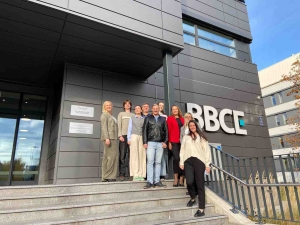
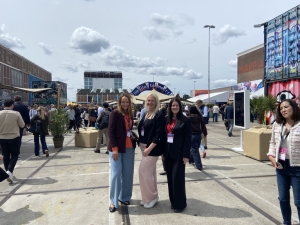
On 11 June 2026, both RESCUE project partners, RTU IBB and Alternative Plants, met in Amsterdam at Hello Tomorrow Summit 2026, the world’s largest and most curated deep-tech event, bringing together scientists, start-ups, industry leaders and investors.
The event provided an opportunity to explore the latest deep-tech trends and gain insights into turning scientific innovations into market-ready solutions, attracting investment, scaling technologies and building industry partnerships. It was also a valuable opportunity to strengthen collaboration between the RESCUE partners and gather new ideas for the further development and future impact of the project.
🎓 RESCUE Young Researchers Successfully Defend Their Bachelor Theses
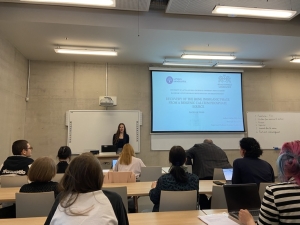
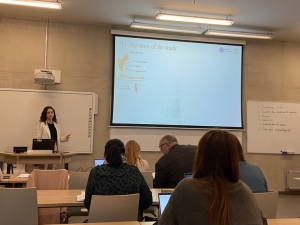
On 1 June 2026, two young researchers involved in the RESCUE project successfully defended their Bachelor theses on topics directly related to the project research.
Elizabete Līva Puzule presented her thesis “Chemically Crosslinked Hyaluronic Acid and Calcium Phosphate Hydrogels”, while Katrīna Jūlija Casno focused on “Recovery of the Bone Inorganic Phase from a Biogenic Calcium Phosphate Source”.
Both studies contribute to the scientific goals of RESCUE while providing young researchers with hands-on experience in the development of innovative biomaterials.
🧪 RESCUE Results Presented at an International Biomaterials Conference
From 6 to 8 May 2026, Anna Marija Vaišļa participated in the international Scandinavian Society for Biomaterials Conference in Gullmarsstrand, Sweden.
During the conference, RESCUE project results were presented in the poster “MESOPOROUS BIOACTIVE GLASS AS A PLATFORM FOR PLANT-DERIVED ACTIVE COMPOUND DELIVERY”, introducing the international biomaterials community to the project’s approach for delivering plant-derived active compounds using mesoporous bioactive glass.
🌱 Alternative Plants Featured on LTV1 and LSM.lv
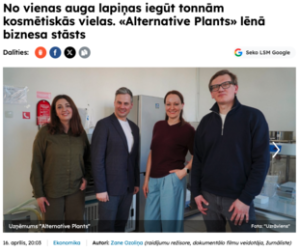
On 16 April 2026, RESCUE project partner Alternative Plants was featured on the LTV1 programme “Uzrāviens”, where the team presented the company’s activities, the potential of plant cell biotechnology and its involvement in the RESCUE project.
On the same day, the company’s story was also highlighted in an LSM.lv article, showcasing Alternative Plants’innovative approach to producing plant-derived active compounds and translating scientific research into practical applications.
This media coverage helped introduce both the company’s work and the aims and relevance of the RESCUE project to a wider audience.
🌱 RESCUE Consortium Meeting at RTU IBB
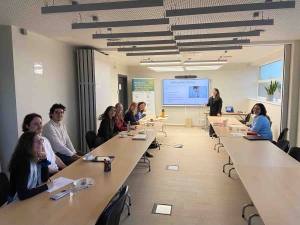
On April 10, 2026, the RESCUE consortium met at Riga Technical University IBB to review project progress. The IBB team presented advances in biogenic calcium phosphate synthesis and four hydrogel preparation strategies, along with initial results on antibacterial activity and cytocompatibility of biologically active compounds. At the same time, Alternative Plants showcased progress in enhancing plant cell-derived secondary metabolite production using external factors. The meeting strengthened collaboration and outlined next steps for the project.
🌱 Discovering Science Through Hands-On Experience on Shadow Day
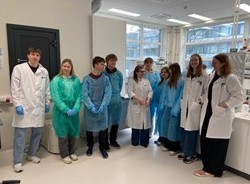
On April 1, 2026, the RESCUE project team welcomed eight high school students during the “Shadow Day” event in Riga Technical University, offering them a unique opportunity to explore the role of a senior laboratory assistant in scientific research.
Throughout the day, students engaged in a variety of practical activities. One of the highlights was an introduction to hydrogel synthesis, during which they observed how hydrogels are formed from different components and learned how composition ratios influence key material properties, such as structure, stiffness, elasticity, and texture. Students were also introduced to the process of obtaining powder-like material from natural sources. They explored why naturally derived materials are valuable in biomedical applications and followed the key preparation steps, from raw material processing to powder formation, while actively participating in selected stages.
Further expanding their knowledge of biomaterials for bone tissue regeneration, the students prepared calcium phosphate and bioactive glass bone cements. They also gained insight into drug delivery systems and their importance in modern biomedical solutions. The students showed great curiosity, actively asking questions and engaging in all activities. The experience provided valuable insight into laboratory work and research organisation, highlighting how diverse, creative, and impactful scientific work can be.
On February 4, 2026, the goals and progress of the RESCUE project were highlighted in an interview on Latvijas Radio1 (LR1) programme “Labrīt”. The discussion featured insights into innovative research aimed at transforming the treatment of bone infections.
👉 LSM.lv article and recording: https://lr1.lsm.lv/lv/raksts/labrit/petnieki-attista-jaunus-risinajumus-kas-varetu-arstet-kaulu-infe.a217316
According to the project coordinator, Professor Dagnija Loca, the research focuses on testing plant-derived compounds as active agents within the biomaterial system, opening new possibilities for infection control and tissue healing. This approach directly addresses a growing global health challenge: bacterial resistance to antibiotics, which increasingly limits the effectiveness of conventional infection treatments. By reducing reliance on antibiotics, the RESCUE project aims to contribute to safer and more sustainable therapeutic strategies.
🌱 RESCUE Project Consortium meeting on 2nd of February 🌱
The RESCUE partner quarterly consortium meeting took place at Alternative Plants’ facilities, where partners explored the fascinating world of plant cell–based production of biologically active substances. Alongside insightful discussions on project progress, the strong collaboration between industry and academia sparked fresh perspectives, new ideas, and exciting directions for the next phase of RESCUE’s development.
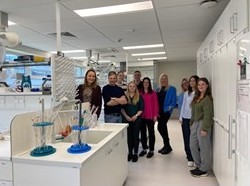
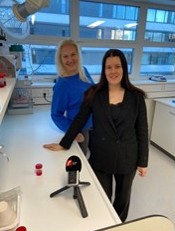
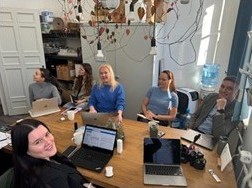
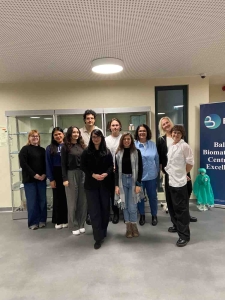
On 3rd November 2025, members of the RESCUE project team – Dagnija Loca, Anna Marija Vaisla, Elizabete Liva Puzule, and Kristine Salma-Ancane – took part in an inspiring Gender Ethics & Equality training led by Francesca Carlin at the Baltic Biomaterials Centre of Excellence.
The training offered a thoughtful mix of theory, reflection, and practical tools, covering key topics such as gender equality in research, unconscious bias, inclusive communication, imposter syndrome, and boundary-setting strategies. Through real-life examples and interactive discussions, participants explored how implicit assumptions and communication patterns shape workplace culture and scientific careers, while also gaining strategies to strengthen confidence, self-awareness, and resilience.
The session concluded with hands-on techniques for setting healthy professional boundaries, empowering participants to communicate needs clearly and constructively. The RESCUE team values this experience as an important step toward fostering a more respectful, equitable, and inclusive research environment, and looks forward to integrating these insights into the project’s daily work and collaboration culture.
We explored:
🧠 Unconscious bias
🗣️ Inclusive communication
💭 Imposter syndrome
🛑 Boundary-setting strategies
The RESCUE project kick-off meeting, held on 20 October 2025, took place at Riga Technical University (RTU), Institute of Biomaterials and Bioengineering, marking the official start of the collaboration and aligning partners on shared goals and next steps.
Project coordinator Prof. Dagnija Loca (RTU) presented the project concept, objectives, and expected outcomes, followed by Alternative Plants Ltd., represented by Mg. biol. Anna Ramata-Stunda, who introduced the partner’s research expertise and technology plan focused on plant stem cell extracts.
The meeting continued with constructive discussions on key scientific and practical topics, including sustainability, extract composition, in vitro testing, and dissemination strategies. Partners agreed on concrete next steps, laying a strong foundation for effective collaboration and impactful results throughout the project.
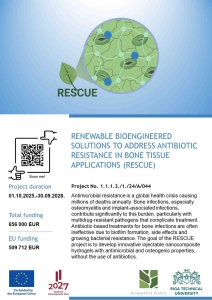
On 1st October, we launched the RESCUE project with the goal of tackling antibiotic resistance. During the first month of the project, we prepared a short and easy-to-understand summary to explain the project to a general audience. In addition, we created a clear and concise project poster that highlights what RESCUE is about and what will be achieved during its implementation.
Easy-to-understand RESCUE summary:
When bacteria become stronger than medicines. All over the world, more and more bacteria are learning how to survive medicines called antibiotics, which once could easily kill them. This problem is known as antimicrobial resistance. Bone infections are especially difficult to treat. They can occur in diseases like osteomyelitis or around metal implants used to replace damaged bone or fix bone fractures. In these areas, bacteria form thick protective layers called biofilms, which shield them from medicines. Because of this, common antibiotics often no longer work. The RESCUE project aims to find a better solution. Its goal is to develop a new injectable gel that can fight harmful bacteria and support bone healing without using antibiotics.